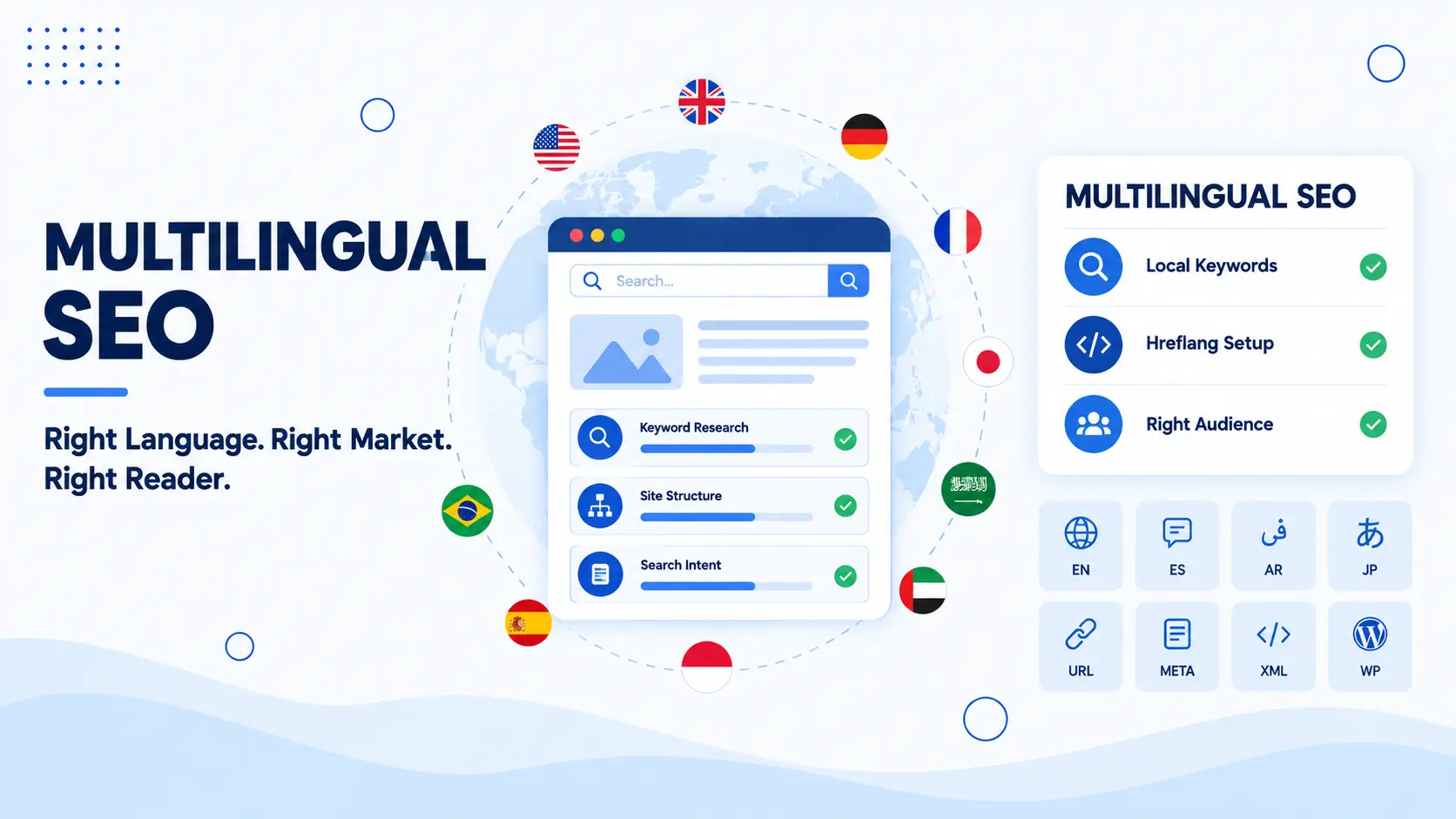
Multilingual SEO That Actually Gets Your Content Found in Every Language
Multilingual SEO starts the moment someone in Sydney, New Jersey, or Dubai searches for your service in their own language and finds a competitor instead of you. Maybe your English site ranks beautifully and your content is genuinely strong, yet a huge slice of your audience never even sees it, because they simply don’t type things the way you write them.
I’ve watched this play out again and again with clients who assumed their content was underperforming, when really it was invisible to the people it was meant for. Closing that gap takes more than dropping your pages into a translation tool and hoping for the best. Once you understand what’s really happening behind the scenes when search engines serve content across languages, the whole picture starts to make a lot more sense.
What Is Multilingual SEO?
Multilingual SEO is the practice of optimising your website so it ranks and performs well across multiple languages, not just translating your pages and hoping Google figures out the rest. It means researching how people actually search in each language, adapting your content and metadata for those searches, and structuring your site so search engines know exactly which version to show which audience.
Here’s the thing most people get wrong. They treat language as a formatting job. They run their best-performing English page through a translation app, publish it under a new URL, and wait for the traffic to roll in. It rarely does, and there’s a simple reason why.
A literal translation carries over your English keywords, your English phrasing, even your English assumptions about what your audience wants to know. Your German or Japanese audience isn’t searching with any of that in mind. They have their own habits, their own slang, their own way of framing the exact same problem you’re trying to solve for them.
Real multilingual SEO treats every language as its own mini market. You’re not translating a page. You’re rebuilding it for a different set of searchers who happen to want the same outcome as your English audience, just described completely differently. That distinction is what separates a site that quietly sits on page three in every language except English, from one that actually shows up when someone searches in their own words.
Why Is Multilingual SEO Important?
Picture two businesses selling the exact same product. One only shows up when people search in English. The other shows up no matter what language someone types into Google. Which one do you think wins more customers, more trust, and more long term growth? That’s the whole argument for multilingual SEO in a single question.
Most of the internet isn’t English speaking, and a huge share of global search demand lives in languages your site currently ignores. Here’s what that costs you, and what fixing it earns you back.
- You’re invisible to non English searchers
If your content only exists in English, you’ve already ruled yourself out before someone even had the chance to consider you. - Translated content feels translated
Content written the way people actually speak and search feels made for them, not translated at them, which shows up in time on page and conversion rate. - Search engines reward that trust
A well built multilingual site tends to earn stronger rankings in each target market, not just a weaker spillover of its English performance. - Your competitors are leaving gaps open
Plenty of businesses in your industry are still English only, and every one of those gaps is an opening you can take.
How Does Multilingual SEO Work?
At its core, multilingual SEO is a system built from three moving parts working together. Get all three right and search engines know exactly who to show your content to. Miss one and even great content can sit invisible in the language it was written for.
The first part is language targeting. This is how you tell Google and other search engines which page is meant for which language audience, usually through hreflang tags that quietly work in the background of your HTML. Hreflang doesn’t translate anything and doesn’t boost rankings on its own. What it does is prevent search engines from getting confused when you have five versions of the same page sitting on your site, each written for a different language. Without it, Google might show your Spanish speaking user the English page, or worse, index your Spanish and French pages as duplicate content competing against each other.
The second part is the content itself, and this is where most sites quietly fail. Ranking well in a language means writing for that language, not translating into it. Every language has its own search behaviour, its own long tail phrases, its own cultural references that make content feel relevant rather than foreign. A page that ranks brilliantly in English because it nails American search intent can flop completely in Japanese if it was built around keywords a Japanese searcher would never actually type.
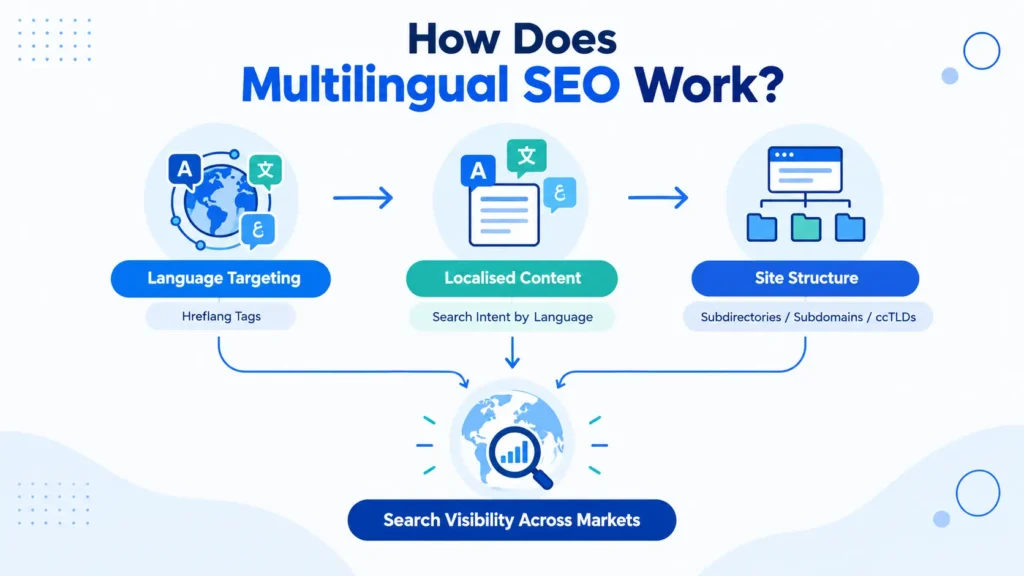
The third part is site structure, and it’s the piece that ties everything together. Where you place your language versions, whether that’s subdirectories like yoursite.com/de/, subdomains like de.yoursite.com, or entirely separate country code domains, affects how search engines crawl, index, and distribute authority across your site. Get this wrong early on and you end up fighting your own architecture for years, even after your content and targeting are solid.
When these three parts work in sync, something interesting happens. Your site stops being one English property trying to reach the world, and starts becoming a collection of properly localised entry points, each one built to earn trust and rankings in its own market.
Multilingual SEO vs International SEO
People throw these two terms around like they mean the same thing, and honestly, it’s easy to see why. Both deal with reaching audiences outside your home market, both involve some flavour of localisation, and both show up in the same conversations about global growth. But they’re solving different problems, and mixing them up is exactly how sites end up with the wrong structure for their goals.
Multilingual SEO is about language. It’s for a business that sells the same thing everywhere but needs to speak to people in their own tongue, think a software company with English, German, and Japanese versions of the same product page, all targeting the same country in some cases, just different language speakers within it.
International SEO is about geography. It’s built for businesses that need to adjust not just language but pricing, currency, shipping, legal requirements, and sometimes even product availability, because the market itself changes from country to country, not just the words on the page.
Here’s where it gets interesting. A lot of businesses need both at once. You might sell in the US, Canada, and Mexico, which means adjusting currency and shipping (international SEO), while also serving English and French content to Canadian users and English and Spanish content in the US (multilingual SEO layered on top).
Think of multilingual SEO as one tool inside the bigger international SEO toolbox. You can absolutely run multilingual SEO without touching international SEO at all, plenty of single country, multi language sites do exactly that. But if you’re expanding across borders, you’ll almost always need multilingual thinking layered underneath your international strategy, because language and geography rarely move in perfect sync.
Multilingual Keyword Research
This is the step that decides whether everything else in this article actually works. You can nail your hreflang tags, structure your site perfectly, and write beautifully localised copy, and still rank nowhere, because you built the whole page around the wrong words.
Why direct translation of keywords fails?
Keywords aren’t just vocabulary, they’re a window into how people think about a problem, and that thinking shifts language to language in ways a dictionary can’t predict. Your English keyword “affordable project management software” translates cleanly into Spanish as “software de gestión de proyectos asequible.” It’s grammatically flawless and almost nobody searches it that way.
Real Spanish speakers are more likely typing “programa para gestionar proyectos barato,” a phrase that would look like a rough, unpolished translation if you saw it written the other way around. The correct translation and the correct keyword are frequently two completely different phrases.
Finding how each audience actually searches
The fix is running keyword research separately for every target language, treating each one as its own market rather than a mirror of your English strategy. Tools like Ahrefs and Semrush support multiple language and location combinations, letting you see search volume and related terms specific to, say, German searchers in Germany rather than German speakers generally.
Google’s autocomplete and “people also ask” sections, viewed with a VPN set to your target country, can also surface real phrasing you’d never generate by translating your existing list. Where possible, having a native speaker sanity check your final keyword list catches the subtle stuff, regional slang, generational phrasing, terms that are technically correct but sound stiff or outdated to an actual local.
Handling search intent differences between languages
Even when a keyword translates reasonably well, the intent behind it can shift. A term that’s purely informational in English might carry heavier commercial intent in another language, simply because that market searches and buys differently at that stage of the journey.
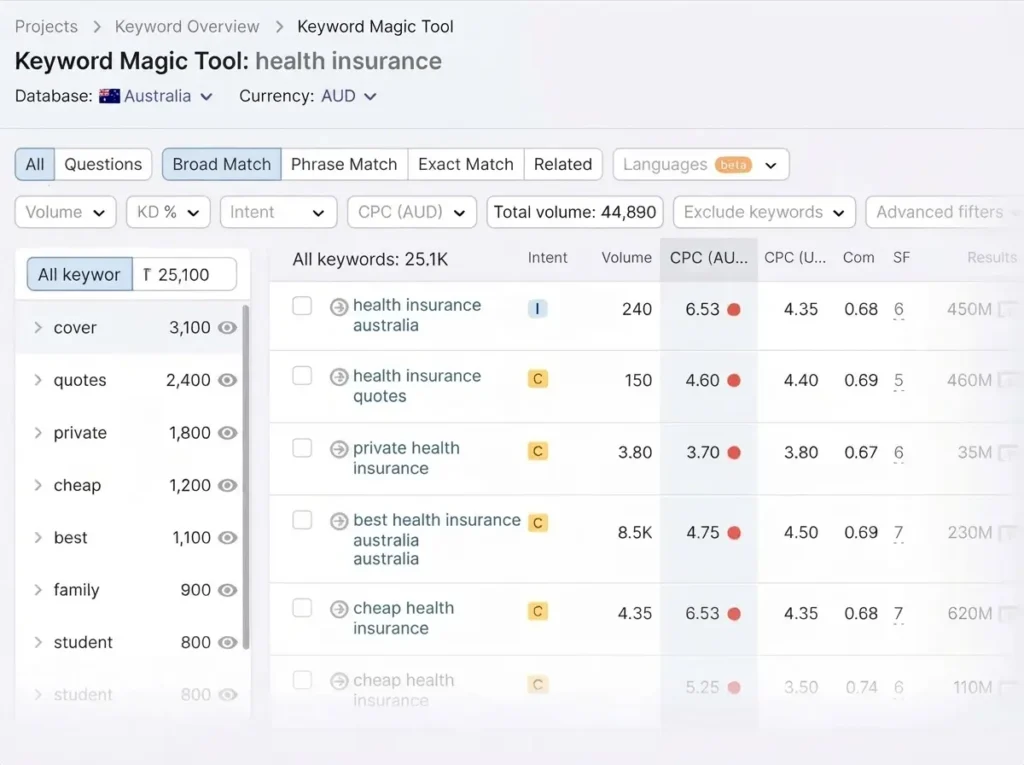
Skipping this check means you might build a detailed educational article for a keyword where the audience actually wanted a product comparison, or the reverse, a hard sell page for a search that was really just someone trying to understand the basics. Matching intent per language is just as important as matching the words, and it’s the part most sites skip entirely because it takes real research rather than a quick translation.
Multilingual On-Page and Technical SEO
Everything covered so far sets the foundation, but this is where multilingual SEO either clicks into place or quietly falls apart in the details. Get the technical layer wrong and even perfectly researched, perfectly localised content can fail to show up at all.
1. Translated titles, meta descriptions, and URL slugs
It’s tempting to leave your URL slugs in English across every language version, especially when it feels faster to set up. Resist that urge. A French user searching for “logiciel de gestion de projet” is far more likely to click a result with a French slug and French title tag than one that still reads /project-management-software/ underneath a translated headline. Every visible element search engines pull into a result, your title tag, meta description, and slug, should be built in the target language using the keyword research for that language, not lifted from your English version and swapped word for word.
2. Hreflang, canonicals, and multilingual sitemaps
Hreflang tags tell search engines which language and regional version of a page to show which user, and getting the syntax wrong is one of the most common ways multilingual sites accidentally undermine themselves. Every language version needs a return tag pointing back to the others, and missing even one direction in that chain can cause search engines to ignore the whole hreflang cluster.
Canonical tags matter here too. Each language version should canonicalise to itself, not to your English page, otherwise you’re accidentally telling search engines that only the English version deserves to exist in their index. And once you’re running more than a handful of language versions, a single sitemap gets messy fast. Splitting into language specific sitemaps, then referencing them all from one sitemap index file, keeps things clean and makes it far easier for search engines to crawl everything efficiently.
3. Handling RTL and other structurally unique languages
Some languages need more than a translated headline, they need the whole page rebuilt around how that language actually behaves. Right to left languages like Arabic, Hebrew, and Urdu introduce a layer most multilingual guides skip entirely.
It’s not just about translating the words, the entire layout needs to mirror, navigation, icons, alignment, even where the logo sits. A site that translates into Arabic but keeps its left to right layout intact tends to feel foreign to Arabic readers in a way that’s hard to put into words but easy to feel, and that unfamiliarity quietly pushes people away even when the content itself is accurate.
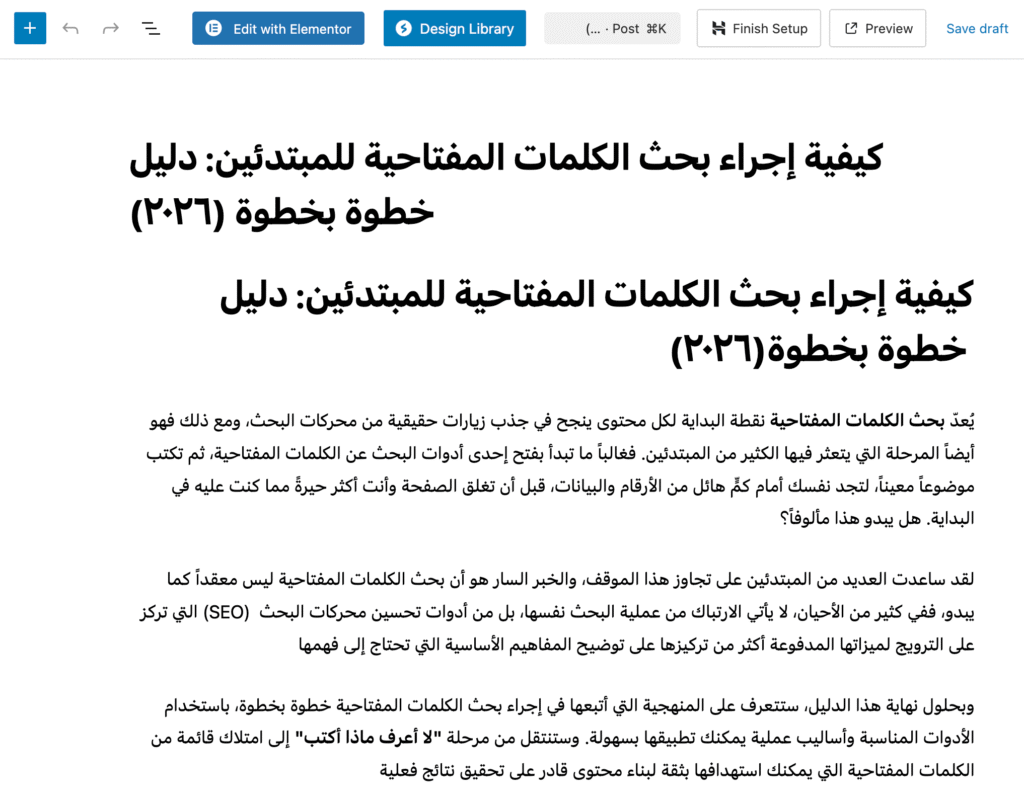
RTL isn’t the only structural curveball either. Languages like Chinese, Japanese, and Korean pack far more meaning into fewer characters, so a headline that fits neatly in English can suddenly look sparse or oddly spaced once translated, meaning your typography and layout may need adjusting per language rather than assuming one font size fits everyone.
German, on the other hand, tends to run long, with compound words that can quietly break a layout built around punchy English headlines. The pattern here matters more than any single language. Every language has its own quirks, and assuming your design will simply flex to accommodate all of them is exactly how sites end up with broken layouts nobody noticed until a native speaker pointed it out.
Most modern CMS platforms, WordPress included, have RTL support built in or available through plugins, but it’s worth testing the actual rendered page rather than assuming the plugin handled everything correctly. Small things slip through, a stray left aligned element or an icon that still points the wrong direction can be enough to make the page feel unfinished.
Multilingual SEO vs Translation
This is probably the single biggest misunderstanding in the entire multilingual space, and it’s costing businesses real traffic every single day. People hire a translator, get their pages converted word for word into another language, publish them, and then wonder why nothing ranks. Translation and multilingual SEO are not the same service, and treating them as interchangeable is where most multilingual strategies quietly fail before they even start.
Translation is about meaning. A good translator takes your English sentence and produces the equivalent sentence in French, German, or Arabic, preserving tone, grammar, and intent. That’s a genuinely valuable skill, and for legal documents, product manuals, or customer support, it’s exactly what you need.
Multilingual SEO is about search behaviour. It doesn’t ask “how do I say this correctly in Japanese.” It asks “what would a Japanese person actually type into Google when they want this.” Those two questions often produce completely different answers, because the way people search rarely matches the way they’d write a formal sentence.
A perfectly translated page can still rank on page five, while an imperfectly translated but properly researched page can land on page one. That’s not a knock against translators, it just means translation is one ingredient in multilingual SEO, not the whole recipe. The strongest approach combines both, a translator or native speaker who ensures the content reads naturally, paired with keyword research that makes sure it’s naturally saying the thing people are actually searching for.
How to Measure Multilingual SEO Performance
Publishing multilingual content is only half the job. If you’re not measuring performance language by language, you’re basically flying blind, celebrating overall traffic growth while one or two languages quietly do all the work and the rest sit dead in the water.
1. Segmenting traffic by language in GA4
Your overall traffic numbers hide more than they reveal once you’re running multiple languages. A site pulling solid numbers overall might actually be thriving in English and barely registering in Arabic, and you’d never know it from the top line report.
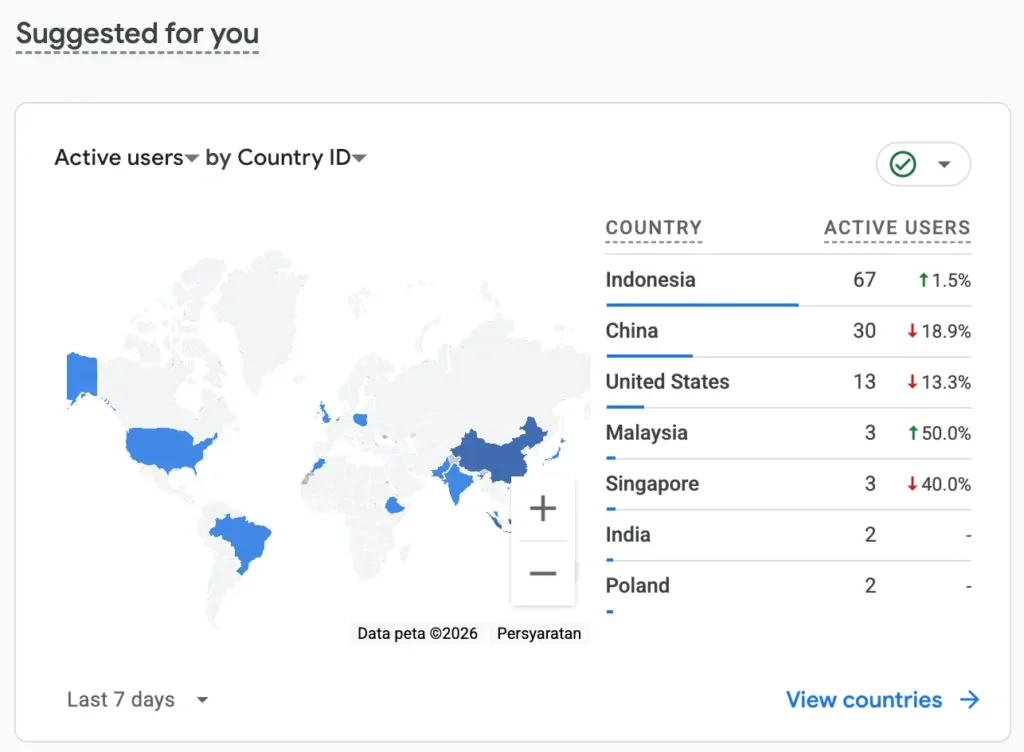
Set up segments or filters in GA4 based on your URL structure, whether that’s a language subdirectory or subdomain, so you can see engagement, conversion rate, and bounce rate broken out per language. This is usually where you first spot a language version that’s technically live but functionally invisible to its audience.
2. Using country and language filters in Google Search Console
Search Console lets you filter performance by both country and, if your hreflang setup is solid, by the specific pages ranking in each language. This is where you catch problems that traffic data alone won’t show you, like a French page that’s indexed and getting impressions but earning almost no clicks, which usually points to a title or meta description that doesn’t match how French speakers actually phrase their searches.
3. Tracking rankings per language
Generic rank tracking tools often default to your home country, which means your German rankings can look completely invisible even when the page is performing fine in Germany. Make sure whatever tool you’re using lets you track rankings by specific country and language combination, not just by keyword. A keyword ranking well in the US and poorly in Mexico is not a single ranking, it’s two completely different results wearing the same keyword.
4. Putting it together
None of these metrics mean much in isolation. A language with strong impressions but weak clicks points to a metadata problem. Strong clicks but a high bounce rate points to a content or intent mismatch. Strong engagement but no rankings at all usually means your technical setup, hreflang tags or indexing, is holding you back before the content even gets a fair shot. Measuring per language is what turns multilingual SEO from a one time launch into an ongoing strategy you can actually improve.

Take Your Multilingual SEO Further with Tsabit Insight
Multilingual SEO isn’t something you set up once and walk away from, it’s a living part of your strategy that needs revisiting as new markets open up and your business grows. If you’ve made it this far through the guide, you already know there are a lot of moving pieces to manage well, hreflang tags, per language keyword research, structure decisions, and ongoing measurement across every market you’re targeting.
The good news is you don’t have to manage all of it alone. At Tsabit Insight, I provide freelance SEO Expert services built around exactly this kind of process, researching how your audience actually searches in each language, mapping that research to the right pages, and turning it into content that genuinely ranks and converts rather than just reads well.
Every project starts with understanding your goals and the markets you’re trying to reach, the same way this guide does, before any tool or technical setup gets involved. Whether you’re launching your first language version or trying to fix a multilingual strategy that’s stalled, the approach stays grounded in what actually drives visibility, not just what looks polished in a report.
If you’re looking for a reliable freelance SEO specialist to guide your multilingual strategy in the right direction, contact me to discuss your project and discover how Tsabit Insight can help your business grow through smarter, more targeted search visibility across every language your audience speaks.
FAQ