Backlinks Guideline: What I’ve Learned Building Links That Actually Rank
Backlinks are one of the reasons some websites shoot to the top of Google while others, with better content, sit buried on page three. I’ve spent years building link profiles for clients across different industries, and if there’s one thing I keep coming back to, it’s this: backlinks aren’t just a ranking factor, they’re a trust signal. Google doesn’t just want to know that your content exists. It wants to know that other people think it’s worth pointing to.
That’s the part most guides skip. They’ll hand you a checklist of link-building tactics without ever explaining why those tactics work, or why a single link from the right site can outperform fifty from the wrong ones. So before we get into strategy, let’s start where every good link-building foundation should: understanding what a backlink actually is, and why it carries so much weight.
What Is a Backlink?
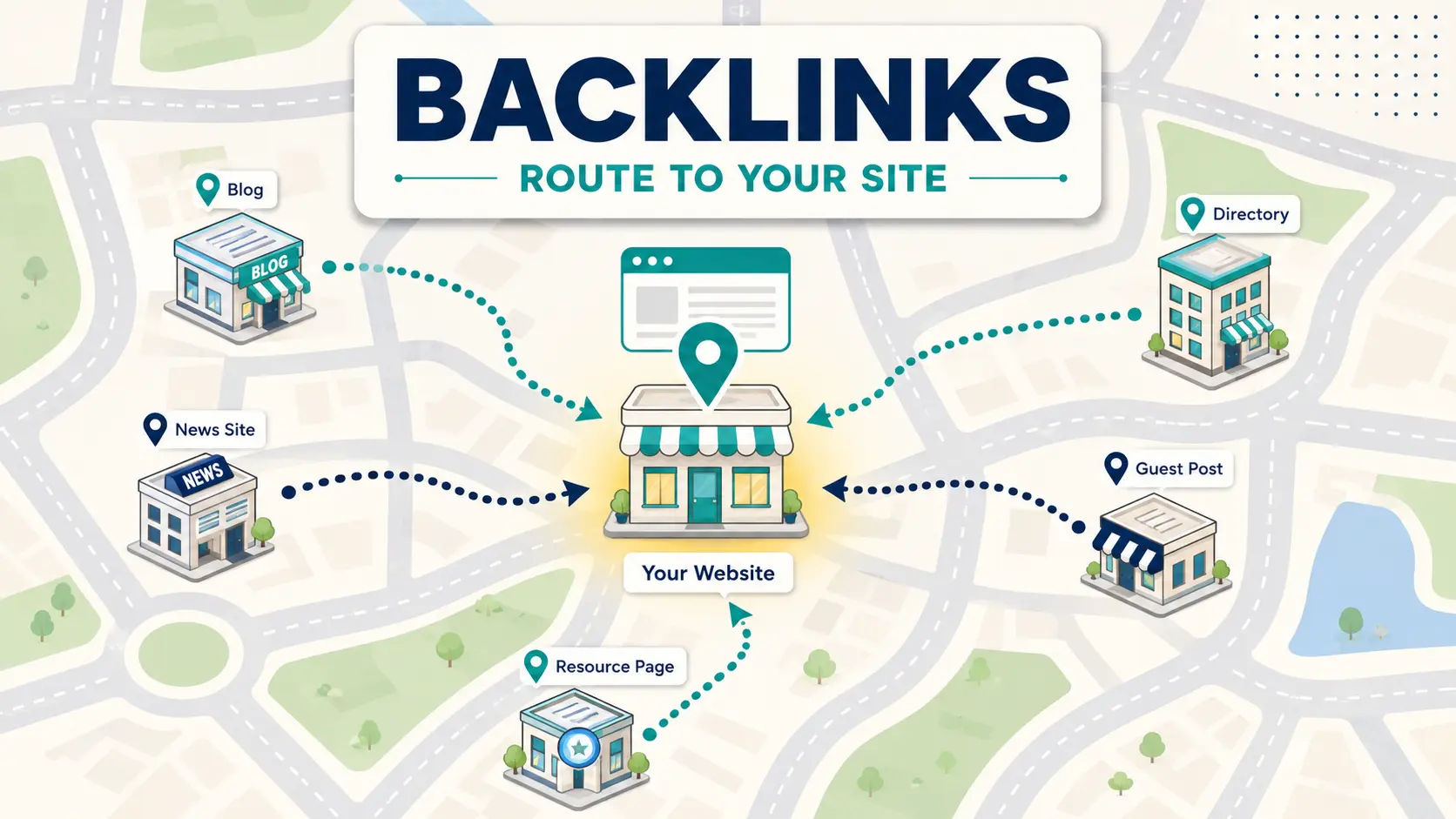
A backlink is a link from one website to another. Simple as that sounds, the mechanics behind it are what make backlinks so powerful for SEO. When Site A links to Site B, it’s essentially vouching for Site B, telling both users and search engines “this is worth checking out.” This is also why backlinks sit at the core of off-page SEO, the part of your strategy that happens outside your own site but still shapes how much Google trusts it.
I like to think of backlinks as citations in an academic paper. If your research gets cited by other credible papers, it signals that your work holds up. Websites work the same way. The more (and better) sites that link to yours, the more Google trusts that your content deserves visibility.
Why Are Backlinks Important for SEO?
If content is what you say, backlinks are what other people say about you. And Google trusts other people more than it trusts you.
Here’s the thing about ranking algorithms: they can’t taste your content the way a human can. They can’t tell if your explanation is genuinely helpful or just well-formatted filler. Backlinks give Google a proxy for that judgment. Every link pointing to your page is essentially a vote, and votes from credible, relevant sources carry real weight in how Google decides who deserves to rank.
I’ve watched two nearly identical pages, same keyword, same word count, similar on-page optimization, land on completely different pages of the SERP. The difference almost always came down to one thing: link authority. The page that ranked had backlinks from sites Google already trusted. The page that didn’t, had none.
Beyond rankings, backlinks do a few other jobs that don’t get talked about enough:
- They drive referral traffic
A well-placed link on a high-traffic site sends real visitors your way, not just search engine crawlers. - They speed up indexing
Search engines discover new pages faster when those pages are linked from sites they already crawl regularly. - They build topical relevance
A link from a site in your niche tells Google what your content is actually about, reinforcing your relevance for that topic.
So when people ask me whether backlinks still matter in 2026, my answer’s the same as it’s always been: they’re not the only thing that matters, but they’re still one of the clearest trust signals Google has to work with. Nothing else in the algorithm does quite the same job.
How Do Backlinks Work?
A backlink isn’t just a blue underlined word sitting on someone else’s page. Underneath it, there’s a small stack of signals Google reads every time it crawls that link, and understanding them is what separates people who build backlinks strategically from people who just collect them.
Here’s what’s actually happening when Site A links to Site B:
- The link passes authority
Every page has a certain amount of ranking strength, built up through its own backlinks, content, and trust signals. When that page links out, it shares a portion of that strength with the page it’s linking to. A link from a site Google already trusts carries more weight than a link from a brand-new, unproven site. - The anchor text tells Google what the link is about
The clickable text itself, whether it says “backlink strategies,” “click here,” or your brand name, gives Google context about the linked page’s topic. I go deeper into how to choose the right anchor text, but the short version is: it matters more than most people think, and getting it wrong can actually hurt you. - The link’s placement and context matter
A link buried in a footer or sidebar doesn’t carry the same weight as one placed naturally within the body of an article, surrounded by relevant content. Google reads the words around a link too, not just the link itself. - Dofollow vs nofollow status determines whether authority passes at all
Not every link is built the same way under the hood. Some explicitly tell Google to pass ranking value; others don’t. We’ll get into that distinction in the next section, because it changes how you should think about which links are actually worth pursuing.
Put together, these signals are why one backlink can move the needle for your rankings while another, sitting right next to it on the same page, does almost nothing.
Also Read : What are Social Signals and Do They Actually Impact Your SEO in 2026?
Types of Backlinks
Not all backlinks come from the same place, and not all of them are safe to pursue. Once you start building links, you’ll run into the same handful of types over and over, so it’s worth knowing which ones are worth your time and which ones can quietly damage your rankings.
- Editorial backlinks are the gold standard, and firmly white hat. These happen when another site links to yours naturally, because they found your content genuinely useful, not because you asked them to. I’ve had clients earn these just from being cited as a data source or referenced in a roundup post they never even knew existed. If you’re only going to chase one type of link, chase this one.
- Guest post backlinks sit in white hat territory when done properly, meaning you’re contributing genuinely useful content to a relevant, reputable site in exchange for a link. Where this tips into grey or black hat is volume: mass guest posting on low-quality, unrelated sites purely to harvest links is a pattern Google actively watches for, and it can trigger a manual penalty if it looks manufactured.
- Directory backlinks are white hat, as long as the directories are relevant and reputable. For local SEO especially, a handful of trusted directories still pull real value. The moment this turns risky is when someone submits to hundreds of low-quality, spammy directories just to inflate link count, that’s a black hat pattern that flags your whole profile as manipulative.
- Resource page backlinks are safely white hat. Your content gets added to a curated list on someone else’s site because it genuinely fits, think “Best SEO Tools” or “Top Resources for Small Business Owners.” These are often easier to earn than editorial links because the site owner is actively looking for content to add.
- Forum and community backlinks are white hat when the link is a natural, honest part of a helpful answer. They tip into black hat the moment you’re dropping links into unrelated threads just to get a mention out there, a pattern most forum moderators (and Google) catch quickly.
- Social media backlinks are white hat by nature, though most are nofollow. They still matter for visibility and referral traffic, and for increasing the odds that someone else links to you organically after discovering you there.
- Niche edit / contextual link insertions sit in grey hat territory. This is where you pay or negotiate to have a link inserted into an already-published article on another site. It’s not inherently against Google’s guidelines, but if the placement feels forced or unrelated to the surrounding content, it starts to look manipulative.
- PR and news mention backlinks are white hat and genuinely valuable. Links earned through being quoted or featured in press coverage, or through platforms like HARO/Qwoted, carry real authority because they’re earned through legitimate visibility, not manufactured.
- Comment backlinks are low-risk but low-value, most are nofollow and carry little SEO weight. They’re not black hat on their own, but flooding blog comment sections with links purely for backlinks is a spam pattern that can get your domain blacklisted from those sites.
- Profile backlinks (bio or profile links on forums, communities, or business platforms) are similar to comment links: fine in moderation, but building hundreds of empty profiles purely to insert links is a black hat volume play that Google’s spam systems are specifically designed to catch.
- Image and infographic backlinks are white hat. When other sites embed your visual content and credit you as the source, that’s an earned, natural link.
- Redirect backlinks are firmly grey hat. This involves acquiring an expired or redirected domain that already had backlinks, then redirecting that authority to your own site. Google has gotten much better at detecting this over the years, and it can result in lost rankings if the redirect looks unnatural or unrelated to your niche.
- Private Blog Network (PBN) links are black hat, full stop. These come from a network of sites built or acquired specifically to link back to a “money site,” with no real audience or purpose beyond passing authority. Google actively hunts for PBN footprints, and getting caught can mean a manual action that tanks your entire site’s visibility. I’ll go deeper into why these (and other risky link types) are dangerous in the “Backlinks That Can Hurt Your SEO” section below.
Dofollow vs Nofollow Backlinks
Before we go further, it’s worth clearing up something that trips a lot of people up at this point: dofollow and nofollow aren’t another item on the list of backlink types above. They’re a different way of looking at links altogether.
Every type we just covered, editorial, guest post, directory, forum, PBN, all of it, describes where a link came from and how it was earned. Dofollow and nofollow describe something else entirely: a small technical instruction attached to the link’s HTML code that tells Google whether or not to pass ranking authority through it. So the same guest post link could be dofollow on one site and nofollow on another, depending purely on that site’s settings, not on the fact that it’s a guest post.
Think of it less as a category and more as a switch. Every backlink, regardless of its type, has this switch flipped one way or the other. Once you see it that way, the rest gets a lot simpler:
A dofollow link is the default. Unless a site specifically tells search engines otherwise, every link passes some authority from one page to another. These are the links that directly help your rankings.
A nofollow link has a small piece of code attached (rel="nofollow") that tells Google not to pass ranking authority through that link. Sites use this for a few reasons: to avoid endorsing content they didn’t vet, to manage large volumes of user-generated links (like blog comments), or, in the case of sponsored content, because Google requires it.
Here’s what most guides won’t tell you: nofollow links still matter. They don’t move your rankings directly, but they drive real traffic, build brand visibility, and create the kind of natural link diversity that makes your backlink profile look organic instead of manufactured. A profile made up entirely of dofollow links from guest posts actually looks suspicious to Google. A healthy mix is what real authority looks like.
High-Quality vs Low-Quality Backlinks
Here’s something I tell every client who asks me to “just get more backlinks”: quantity was never the goal. Quality was always the goal, quantity just used to be a decent shortcut to get there. That shortcut stopped working years ago.
So what actually separates a high-quality backlink from a low-quality one? It comes down to a handful of signals Google (and honestly, common sense) weighs every time. Here’s how they stack up, along with where each one should sit in your priority order when you’re actually out there building links:
I ranked it this way on purpose. When I’m evaluating a link opportunity, relevance is the first filter, it doesn’t matter how authoritative a site is if it has nothing to do with your niche. Authority comes second, because even a relevant site with no real trust behind it won’t move the needle much.
How the link was obtained matters more than people think too, an editorially earned link almost always outperforms a purchased one, even if the metrics look similar on paper. Referral traffic, placement, and outbound link volume still matter, but they’re refinements you check once the first three boxes are already ticked.
Low-quality backlinks share those traits consistently: little to no organic traffic, irrelevant niche, and placements that exist purely to host outbound links rather than serve readers.
Here’s the mistake I see most often: people chase link count as a vanity metric. Ten backlinks from relevant, trusted sites will outperform two hundred backlinks from low-quality ones, every single time. If you remember one thing from this section, make it that.
Factors That Make a Backlink Valuable
Knowing what makes a backlink “good” in theory is one thing. Knowing exactly what to check before you pursue a link opportunity is another. This is the part I actually walk through when I’m vetting a site before reaching out for a link.
- Content-link relevance match
This is always my first check. It’s not enough for the site to be in your niche, the specific page linking to you should be topically related too. A link from a marketing site’s SEO article pointing to your content is far more valuable than a link from that same site’s unrelated “company news” page. If relevance fails here, none of the other metrics matter much. - Organic traffic
Once relevance checks out, traffic is next. This tells you whether real people actually visit the site, not just whether it looks strong on paper. I always cross-check estimated organic traffic (tools like Ahrefs or SEMrush give you this) before valuing a link. A site with a high-looking authority score but almost no traffic is often a red flag for a manipulated backlink profile. - Domain Authority (DA) and Domain Rating (DR)
These are third-party metrics from tools like Moz and Ahrefs that estimate a site’s overall strength based on its backlink profile. They’re not Google metrics, Google doesn’t use DA or DR internally, but they’re useful shorthand once you’ve already confirmed relevance and real traffic. I generally won’t chase a link from a site under DR 20 unless there’s a strong relevance reason to. - Link velocity and pattern
This one’s about your own profile, not the linking site. Backlinks that build up naturally over time look organic. A sudden spike of hundreds of new links in a week looks manufactured, even if every individual link is technically high quality. Google watches the pace, not just the source. - Anchor text diversity
A healthy backlink profile has a natural mix of anchor text, branded, exact-match keyword, generic (“click here,” “read more”), and naked URLs. If every single backlink uses the exact same keyword-rich anchor text, it reads as manipulated to Google, even if the links themselves came from good sites. - Link freshness and content currency
A backlink sitting on a page that’s actively maintained and updated tends to hold more weight than one on a page that hasn’t been touched in years. Active pages get recrawled more often, which keeps that link’s signal fresh in Google’s eyes. - Trust flow relative to citation flow
This is a more advanced metric (from a tool called Majestic), but worth knowing: it compares link quality against link quantity. A site with a high citation flow but low trust flow usually means it has a lot of links, but from questionable sources. That imbalance is worth checking before you pursue a link there.
Put these together and you get a much sharper picture than “is this a good site or not.” I’d rather have one link that checks every box on this list than ten links that only check one or two.
How Many Backlinks Do You Need?
This is probably the question I get asked most often, and I get why. It feels like it should have a clean number attached to it. It doesn’t.
I know that’s not the answer people want, but here’s the honest version: the number of backlinks you need depends almost entirely on how competitive your keyword or niche is, not on some universal target. Ranking for a low-competition, long-tail keyword might take a handful of decent links. Ranking for something competitive in a crowded industry could take dozens, sometimes hundreds, built over months or years.
Instead of chasing a number, here’s what I actually tell clients to look at:
- Check what’s already ranking
Pull up the top five results for your target keyword and look at their backlink profiles using a tool like Ahrefs or SEMrush. That gives you a realistic benchmark, not a guess. If the top-ranking pages have 50+ referring domains, you’re not getting there with five links, no matter how good they are. - Weigh quality against quantity
A page with 20 highly relevant, high-authority backlinks can outrank a page with 100 mediocre ones. So the real question isn’t “how many links do I need,” it’s “how many links do I need at this quality level.” Those are two very different targets. - Factor in your domain’s overall authority
A well-established site with strong existing authority can often outrank competitors with fewer new backlinks, because it’s already trusted. A newer site usually needs more link-building effort just to catch up to that baseline trust. - Remember content and on-page SEO still carry weight
Backlinks amplify content that’s already solid, they don’t fix content that isn’t. I’ve seen sites with fewer backlinks outrank competitors simply because their content answered the query better and their on-page SEO was cleaner.
If you want a rough starting point rather than “it depends” and nothing else: for low-competition keywords, five to fifteen quality backlinks is often enough. For moderately competitive terms, expect to need somewhere in the twenty-to-fifty range. For genuinely competitive, high-value keywords, it’s not unusual to need well over a hundred, built gradually and naturally over time.
The number matters less than the trajectory. I’d rather see a client gain five relevant backlinks a month, every month, than fifty in one week and then nothing for six months.
How to Build Backlinks
This is the section people usually skip straight to, so let’s get into it. Everything here is white hat, meaning it’s built to last rather than trigger a penalty six months from now. None of these strategies are secret or complicated, what separates people who succeed with them from people who don’t is usually consistency and genuine effort, not some hidden trick.
Create Content Worth Linking To
This is the foundation everything else depends on, so it comes first for a reason. No outreach strategy, no matter how well-crafted, can convince someone to link to content that isn’t genuinely useful. Original research, data studies, comprehensive guides, and practical tools tend to earn links on their own, because other site owners and writers are constantly looking for something credible to cite.
I’ve had a single well-researched industry statistic get picked up and cited across a dozen sites without me ever sending a single outreach email. The lesson there wasn’t luck, it was that the content gave people a reason to link. Thin, generic, or recycled content rarely earns links no matter how polished your pitch is, because there’s nothing there worth pointing to.
Guest Posting on Relevant Sites
Find sites in your niche that accept contributor content, and pitch something genuinely useful, not just a thinly veiled excuse to drop a link. The sites worth guest posting on are usually the ones with an active audience and consistent publishing schedule, not just any blog that says “write for us.”
When I pitch a guest post, I try to write something that would earn its place on that site even if there were no link attached at all, because that’s usually what gets accepted, and it’s also what earns you an invitation to write for them again.
Broken Link Building
Find broken links on relevant sites (tools like Ahrefs have a dedicated broken link checker), then reach out to the site owner and suggest your content as a replacement. This works because it solves a real problem for them, a dead link hurts their user experience and their own SEO, so you’re not asking for a favor, you’re offering a fix. In my experience, this is one of the highest response-rate outreach tactics out there, simply because you’re leading with value instead of a request.
Skyscraper Technique
Find a piece of content that’s already earned a meaningful number of backlinks, then create something noticeably better, more comprehensive, more current, better designed, whatever “better” means for that topic. From there, reach out to the sites already linking to the original and suggest yours as an additional or improved resource. This only works if what you’ve built is genuinely better, not just longer or reformatted. Sending a mediocre “improved” version to sites that already linked to a strong original usually just gets ignored.
Digital PR and HARO/Qwoted
Respond to journalist queries with genuinely useful, specific expert commentary. When your quote gets used, you earn a link from a news or publication site, often with real domain authority and audience reach behind it. This strategy takes consistency far more than it takes luck, most people give up after a handful of unanswered pitches, but the ones who keep showing up with sharp, specific answers eventually start getting picked regularly.
Resource Page Link Building
Search for something like “[your niche] + resources” or “[your niche] + useful links” to find pages that curate helpful content in your space. If your content genuinely fits what they’re curating, reach out and suggest it as an addition. Site owners maintaining these pages are often actively looking for good content to add, they built the page specifically to be a useful hub, so a well-matched suggestion is doing them a favor too.
Building Relationships, Not Just Links
This one gets overlooked constantly, and it’s probably the most underrated strategy on this list. The people who consistently earn backlinks over time usually aren’t running one-off outreach campaigns, they’re building actual relationships with other site owners, journalists, and creators in their space. Once that relationship exists, links become a natural byproduct of it, they mention you because they know your work, not because you asked. That kind of link is also exactly the kind Google trusts most.
Unlinked Brand Mention Reclamation
Set up alerts (Google Alerts, Ahrefs, or similar tools) for your brand name across the web. When someone mentions you without linking, a quick, polite email asking them to add a link often works, they already found you valuable enough to mention, so you’re just closing the loop on something they’d likely be happy to fix.
Backlinks That Can Hurt Your SEO
Not every backlink helps you. Some actively work against you, and this is the part of link building most beginners don’t find out about until it’s already a problem. Google actually lays this out clearly in its link spam policies, and it’s worth understanding what the platform itself considers manipulative before you build another link. I’ve inherited more than one client site that was quietly being held back by a backlink profile they didn’t even know existed.
Here’s what actually causes harm:
- Links from spammy or low-quality sites
A large volume of links from thin, low-authority, or clearly manufactured sites signals manipulation rather than genuine popularity. Even if you didn’t build these links yourself, they can still drag your profile down. - Links from irrelevant or unrelated niches
A sudden cluster of backlinks from a completely unrelated industry, especially ones like gambling, adult content, or pharmaceuticals, is a red flag Google’s algorithms are specifically trained to catch. - Links from Private Blog Networks (PBNs)
As we covered earlier, these are sites built purely to pass authority artificially, exactly the kind of scheme Google addresses in its guidelines on link schemes. Google has gotten very good at detecting PBN footprints, shared hosting IPs, similar site structures, thin content, and links from a PBN can trigger a manual penalty that affects your whole domain. - Paid links that don’t follow Google’s guidelines
Paying for links isn’t inherently against the rules, sponsored content exists for a reason, but paid links need to be marked nofollow or sponsored. Paid links disguised as organic, editorial links are exactly what Google’s spam systems are built to catch. - Negative SEO attacks
Sometimes the harmful backlinks aren’t your fault at all. Competitors or bad actors can build a wave of spammy links pointing at your site specifically to trigger a Google penalty. It’s not common, but it happens, and it’s worth knowing how to spot it. - Unnatural link velocity
A sudden, unexplained spike in backlinks, especially low-quality ones, all appearing within a short window looks manufactured even if you didn’t orchestrate it. Google’s systems are sensitive to pace, not just source.
How to Identify Toxic Backlinks
The first step in dealing with harmful links is knowing how to actually find them, because most site owners have no idea what’s linking to them until they go looking.
Start with a full backlink audit using a tool like Ahrefs, SEMrush, or Google Search Console. Export your complete list of referring domains and look for patterns rather than judging links one by one. A few individual low-quality links usually aren’t worth worrying about, what matters is clusters, spikes, and consistent red flags across many links at once.
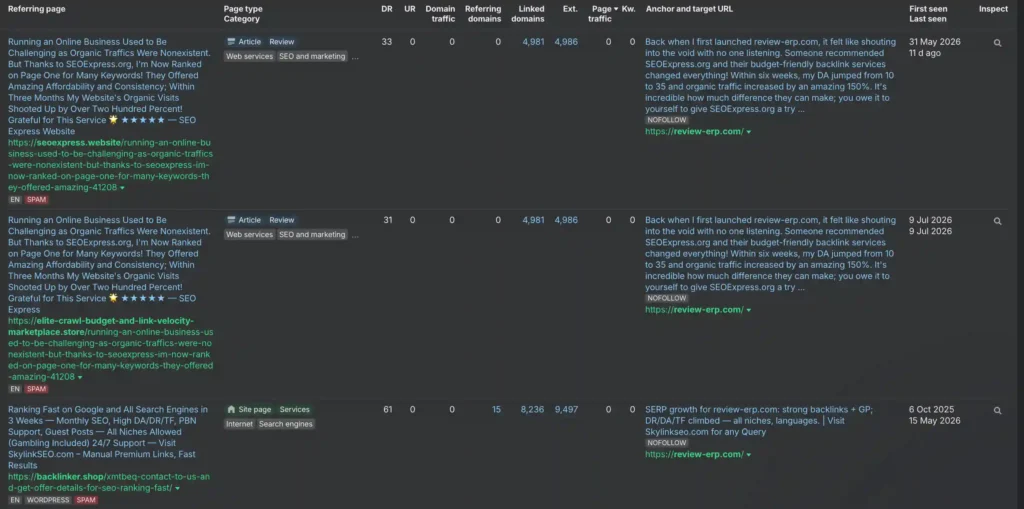
Specifically, watch for: sites with spammy-looking domain names or completely irrelevant content, pages with excessive outbound links to unrelated sites, sudden spikes in referring domains you can’t explain, links from known PBN patterns (similar templates, shared hosting, thin content), and links using the same exact-match anchor text over and over, which almost always signals a manipulated link-building campaign rather than natural growth.
I usually run this kind of audit quarterly for active clients, not because I expect to find something every time, but because catching a toxic pattern early is a lot easier than untangling it six months later.
Should You Disavow Backlinks?
This is the question that comes right after someone finds toxic links in their profile, and the honest answer is: usually not, but sometimes yes.
Disavowing is Google’s disavow tool inside Search Console, used to manually tell Google to ignore specific links or domains when evaluating your site, but it’s a blunt instrument, and using it carelessly can do more harm than the links themselves. Google itself is fairly conservative about recommending this feature, its own documentation states that most sites won’t need the disavow tool at all, reserving it for cases involving a real or likely manual action.
Here’s when I’d actually recommend it: if you’ve received a manual action from Google specifically related to unnatural links, if you’re confident you’re the target of a negative SEO attack with a clear, identifiable pattern of spammy links, or if a large portion of your backlink profile is made up of links you built yourself years ago through outdated black hat or grey hat tactics that are now actively working against you.
Here’s when I’d tell you to leave it alone: if you’ve just found a handful of random low-quality links with no clear pattern, if your rankings are stable and you haven’t received any manual action, or if you’re disavowing purely out of anxiety rather than evidence. I’ve seen people disavow legitimate links out of caution and actually hurt their own rankings in the process, because they removed authority they didn’t need to remove.
If you do decide to disavow, be surgical about it. Disavow specific URLs where possible rather than entire domains, document your reasoning, and treat it as a last resort, not routine maintenance.
How to Check Your Backlinks
You can’t manage what you can’t see, and most site owners have never actually looked at their own backlink profile. This is one of the simplest audits you can run, and it should be routine, not something you only do when something goes wrong.
- Start with Google Search Console
It’s free, it’s connected directly to your site, and it shows you exactly which pages Google has indexed as linking to you. Go to the Links report, it’ll show your top linking sites, top linked pages, and top anchor text being used. It won’t be as comprehensive as a paid tool, but it’s a solid first check and it’s coming straight from Google itself. - Use a dedicated backlink tool for the full picture
Tools like Ahrefs, SEMrush, and Moz crawl the web independently and typically surface far more referring domains than Search Console alone. I usually cross-reference both, Search Console tells me what Google officially sees, the third-party tool tells me the fuller landscape, including links Google hasn’t crawled yet or has quietly ignored. - Look at referring domains, not just total links
A hundred links from ten domains means a lot less than fifty links from fifty different domains. Diversity of source matters more than raw volume, since one domain linking to you a hundred times doesn’t read as a hundred separate votes of confidence. - Check your anchor text distribution
Your backlink tool will show you a breakdown of what anchor text is being used to link to you. This is where you’ll spot problems early, if a huge percentage of your links use the exact same keyword-rich phrase, that’s worth investigating before it becomes a pattern Google flags. - Track new and lost links over time
Most tools let you monitor link velocity, new links gained and old links lost. This matters for two reasons: it tells you if your link-building efforts are actually working, and it alerts you fast if you suddenly lose a batch of valuable links, sometimes a site redesign or content removal on the linking site’s end is the culprit, and it’s fixable if you catch it early.
Analyzing Competitors’ Backlinks
Checking your own backlinks tells you where you stand. Checking your competitors’ tells you where you need to go, and it’s often the fastest way to find link opportunities you’d never have thought of on your own.
Start by identifying two or three competitors who are already ranking for the keywords you’re targeting, not necessarily your biggest business competitors, but whoever’s actually occupying the search results you want. Run their domains through the same backlink tool and look specifically at where their links are coming from that yours aren’t.
A few things worth pulling out of that comparison: referring domains you don’t have yet, especially ones that appear across multiple competitors, that’s usually a sign it’s a site worth pursuing for your own niche. Content that’s earning them links, if one of their blog posts or resources is pulling in backlinks consistently, that tells you what kind of content actually works in your space. And gaps in their profile, sometimes competitors have weaker link diversity than they appear to on the surface, which tells you exactly where you could realistically outrank them.
I run this kind of competitive gap analysis for clients regularly, and it consistently turns up link opportunities that never would have shown up just from looking at my own site in isolation. Your competitors have already done a lot of the outreach legwork, you’re just following the trail they left behind.
Common Backlink Mistakes to Avoid
After years of doing this, I’ve seen the same mistakes show up again and again, sometimes from beginners, sometimes from experienced marketers who should know better. Here’s what I’d tell you to watch for.
- Chasing quantity over quality
This is the mistake that started this whole article, and it’s still the most common one. Ten relevant, authoritative backlinks will outperform two hundred low-quality ones every time. If you’re measuring success by link count alone, you’re measuring the wrong thing. - Over-optimizing anchor text
Using the exact same keyword-rich anchor text across most of your backlinks looks manufactured, because natural link building doesn’t work that way. Real, earned links come with a natural mix, branded terms, generic phrases, naked URLs, and only occasionally exact-match keywords. - Ignoring relevance for the sake of authority
A high-authority link from a completely unrelated niche isn’t the win it looks like on paper. I’d rather have a DR 40 link from a directly relevant site than a DR 70 link from somewhere with zero topical connection to my content. - Buying links without understanding the risk
Paid links aren’t automatically a violation, but paid links disguised as organic ones absolutely are. If you’re paying for placement, it needs to be marked nofollow or sponsored, skipping that step is one of the fastest ways to trigger a manual penalty. - Building links too fast, too soon
A brand-new site suddenly acquiring dozens of backlinks in a matter of weeks doesn’t look like organic growth, it looks manufactured. Link building should scale with your site’s age and authority, not outpace it. - Neglecting your existing backlink profile
People spend all their energy acquiring new links and never check what’s already pointing at their site. Toxic links, lost links, and broken referring pages pile up quietly if nobody’s watching. - Treating link building as a one-time project
I still run into clients who did a big link-building push once, years ago, and haven’t touched it since. Link building isn’t a task you finish, it’s an ongoing part of maintaining and growing authority, the same way content and technical SEO are. - Guest posting purely for the link, not the content
When the goal is only the backlink, it shows. Thin, generic guest posts get rejected by good sites and, if they do get published, rarely earn the kind of trust that actually moves rankings. The content still has to earn its place. - Ignoring internal linking while chasing external links
External backlinks get all the attention, but a strong internal linking structure helps distribute the authority those backlinks bring into your site more effectively. I’ve seen sites waste good backlink authority simply because it had nowhere useful to flow once it landed on the page.
If there’s one thread running through all of these, it’s this: shortcuts in link building tend to catch up with you eventually. The sites that hold their rankings long-term are almost always the ones that treated backlinks as something to earn, not something to manufacture.

Build Backlinks the Right Way with Tsabit Insight
Link building isn’t a box you check once and move on from, it’s an ongoing part of your SEO strategy, one that needs attention as your site grows and your competitors keep building too. If you’ve read through this whole guide, you already know how many moving parts go into doing this well, from vetting sites to tracking anchor text to staying miles away from the tactics that quietly tank rankings. The good news is, you don’t have to manage all of it on your own.
At Tsabit Insight, I offer freelance SEO services built around exactly this kind of work, finding the right sites to pursue, earning links that actually hold up over time, and building a backlink profile that supports your rankings instead of putting them at risk. Every project starts with understanding your site, your niche, and your goals, the same starting point this guide has walked through, before any outreach or tool gets involved.
Whether you’re starting your link-building efforts from zero or trying to recover from a profile that’s stalled or been quietly damaged, the approach stays grounded in what actually moves rankings, not just what looks impressive in a report. If you’re looking for a reliable freelance SEO specialist to build and protect your backlink profile the right way, contact me to talk through your project and see how Tsabit Insight can help your site earn the kind of authority that lasts.
FAQ